Centralised inventory
Hardware, operating system, firmware, networking and software are acquired from versioned MT JSON snapshots and made searchable from one interface.
Inventory · history · visibility
In designA web dashboard designed to turn technical snapshots produced by Maintenance Toolkit into a searchable inventory with history and practical visibility for system administrators.
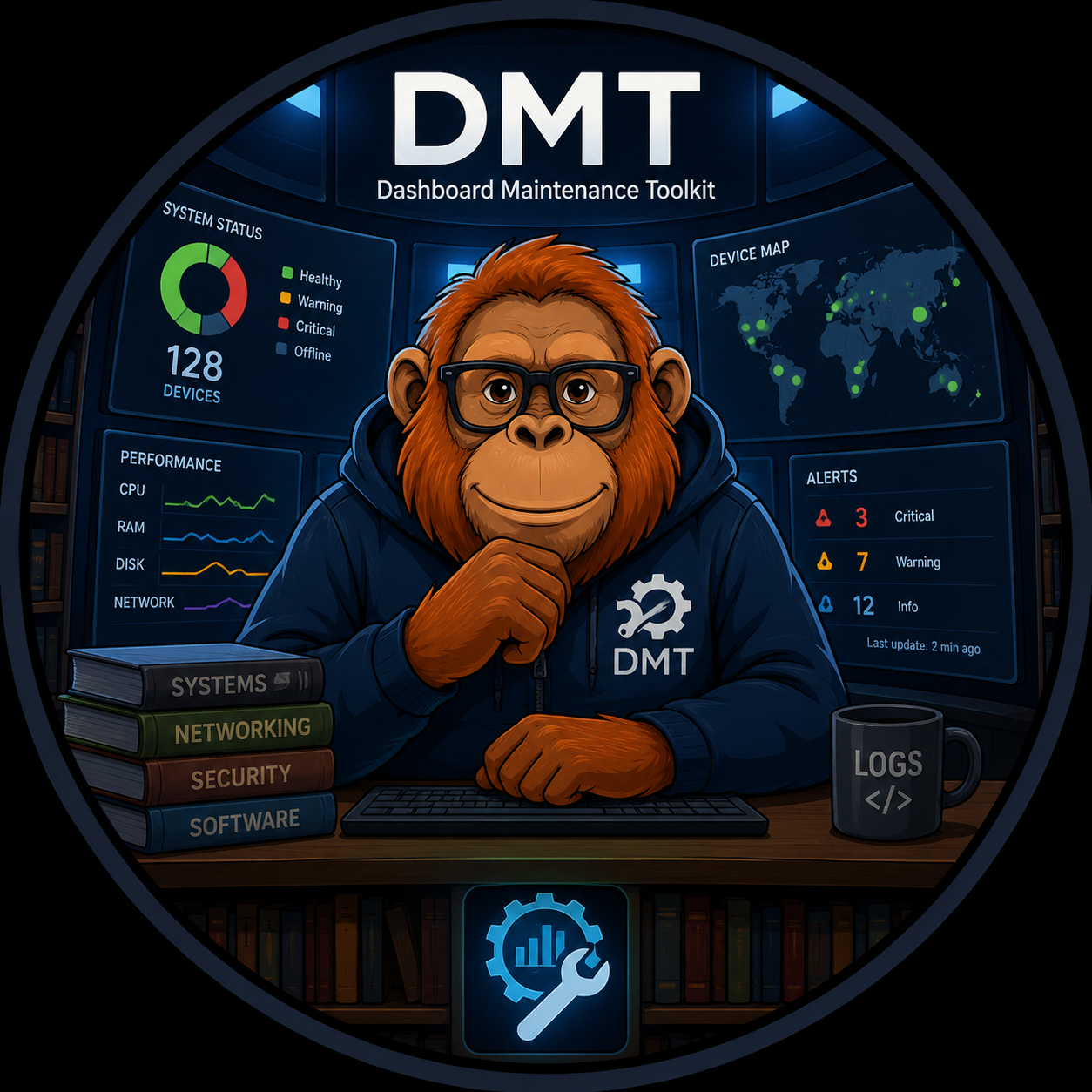
The project
Hardware, operating system, firmware, networking and software are acquired from versioned MT JSON snapshots and made searchable from one interface.
The asset identity survives renaming, reinstallations, user changes, location changes and a completely different operational purpose.
RAM and disk upgrades, firmware, installed or removed software, assignments and retirement can be reconstructed over time.
Principles
Maintenance Toolkit keeps working without DMT. The dashboard consumes versioned snapshots without turning MT into an RMM agent.
DMT periodically scans administrator-configured ingestion folders and also provides an immediate manual import action.
The data model starts ready to separate organisations, sites, departments, people and assets without forcing that complexity into the first demo.
The interface is i18n-first: no UI string is hardcoded. JSON language packs are loaded from the languages folder, with English as fallback.
Initial roadmap
Global search and views by asset, operating system, software, firmware, RAM, last check-in and administrative status.
Purchase or rental, warranty, assignments, site, department, purpose, maintenance, retirement and disposal without losing history.
A web interface that works well on desktop and mobile, with authentication and separation between administration and read-only consultation.